おじさん・おじいさん。い・いい=胃・いい=Iー=E as pronounce like English pronouncation きて・きいて(kiーTE)ほし・ほしい(hoSHIー) すき・スキー ビルBIru・ビールBIーru Come/Listen/ask star/want like,love/ski building/bear
1)You can mention the thing is the thing you can recognize with desu.You don’t have to pronounce last u.It’s only consonant.Pronounce<desk>but omit last k.
If you want to get it,say _____kudasai or _____onegaishimasu(In this case,you don’t have to pronounce u.
If you want to buy THIS one,kore kudasai or kore onegaishimasu. 外来語=中国語を採り入れてきた日本語の学習は、基本的な英語を知っている中国人にとっては相当ラッキー♪ It’s a _____.___です ___,please.Give me _____.___ください。おねがいします。Onegaishimasu sounds little bit polite.But if you want to see or talk to sensei like”Techer,please”,use onegaishimasu.
グーグル アップル ビール テーブル ファイル ホテル シャンプー トイレ レストラン マンションJapanese call apartment,condominium manshon.They have steel flame アパートThis word sounds rather cheep.They never have more than 3rd floor. デパート ビル ノート テキスト スマホ コンビニ エアコン コップPlane one for example かみコップ means paper cup.Cheep one. カップCoffee cup,tea cup. Expensive one. グラスglass.Exquisite one. ガラスpane,glass
You don’t have to say いらっしゃい(ませ) phrase unless you have no chance to be a shop staff. But irasshai-masu is a very important honorific verb you must to learn later,so listen this word carefully.
ひこうきで
あなた「ワイン、おねがいします」
CA「はい。 ワインです。 どうぞ」
あなた「どうも」
おまつりで
おみせのひと「はい、いらっしゃい」
あなた「あのー、たこやき、(いっこ/ひとつ)ください」
おみせのひと「はい、ありがとうございます!The staff give you TAKOYAKI.はい、どうぞ。」
あなた「どうも」
あみせのひと「ありがとうございました」
コンビニで
おみせのひと「いらっしゃいませ」
あなた「おねがいします You placed the thing you want to buy 」
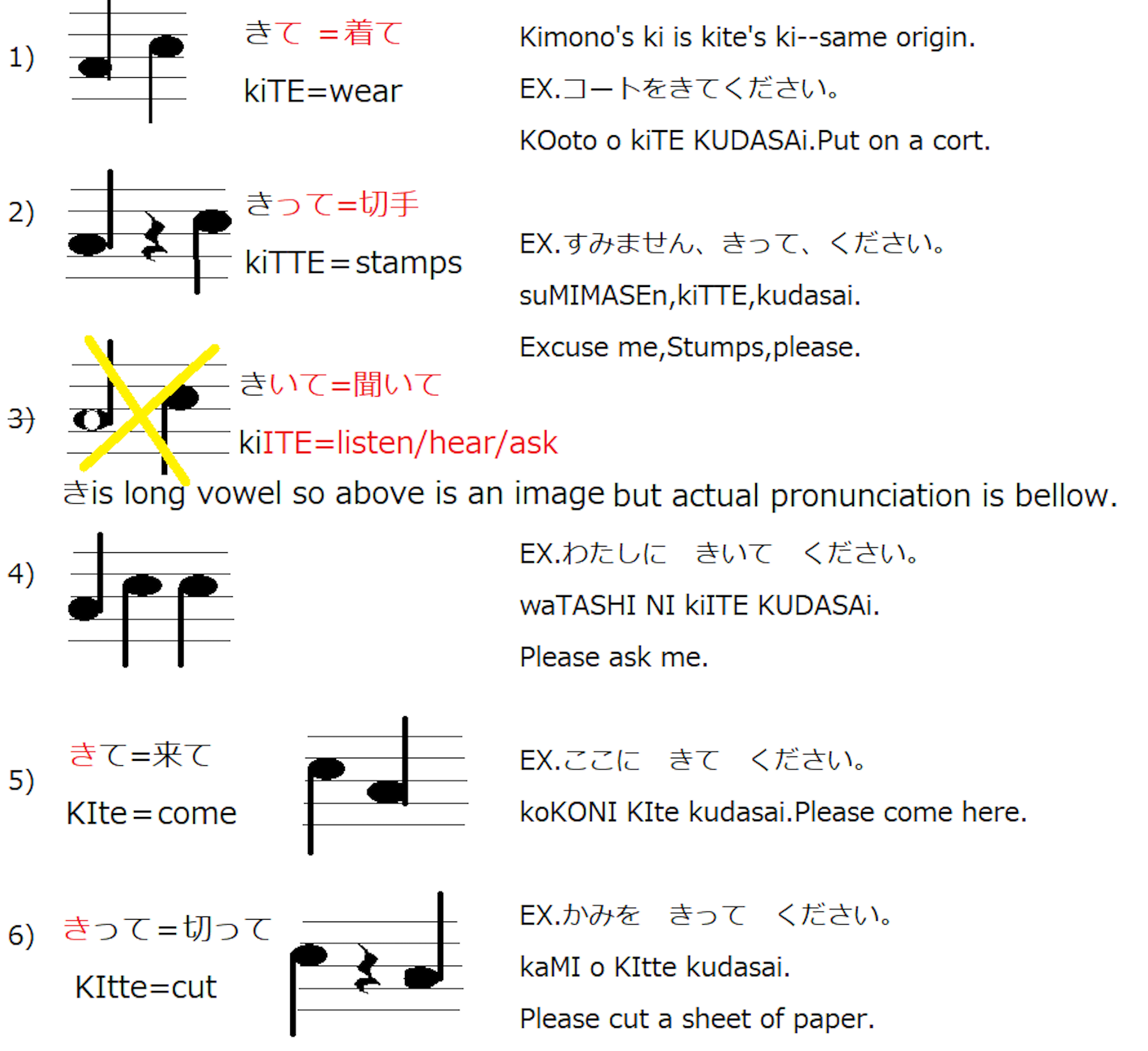
きて・きって・きいてare all very important form called [te]form.
Even in this case the high pitch point can change:
For example:
よーく きいてください。YOOOOku kiite kudasai.
But except such special case,those accent pitch point does not change.
1)Double consonants
It is written small tsu「っ/ッ」and no sound: stop breath.
This makes big difference,too.
いつか Ituska ● ● ● someday
いっか Ikka ●● lesson 1
いか iKA ● ● squid
いたい iTAi painful
いったい iTTAI what on the earth
LINEしって(い)ますか?Do you know the LINE?
LINEして(い)ますか?Do you use the LINE?
上海に いたとき iTATOki When I lived in Shanghai
上海に いったときiTTATOki When I went to Shanghai
ねこ NEko cat みいちゃんは、かわいいねこです。
ねっこ neKKO root(colloquial) これは、きのねっこです。
いた Ita board いた、ありますか?
いた iTA I found him/her. 「あっ!みいちゃんが いた!!」
いった iTTA said/went みいちゃんが「ニャー」といった。Miichan mwe.
そして、あっちにいった。And she went over there.
<いた、いった> are short forms.
もてる moteru Girls are all over him.
もってる motteru have
2)We write<Let’s go>in katakana but I write here both way.
れっつごう
3)ここkoKO VS こうこうkoOKOO VS こっこKOkko VS こっこうkoKKOO
here VS highschool VS national Treasury VS diplomatic relations
4)Tongue twister(はやくち ことば=haYAKUCHI KOtoba)
とうきょう とっきょ きょかきょく ゆうびんきょく
Tokyo Patent Permit station Post office
toOKYOO TOkkyo kyoKAkyoku yuUBInkyoku
5)Did you realize that I wrote CAPITAL for high pitch and Lowercase for low pitch.
But I don’t think you MUST obey or remember all of them.
One of the reason is it’s easy to change pronunciation(high point).
ぎんこう giNKOO bank
みつびしぎんこう miTSUBISHIGInkoo
When I lived in Shanghai,I want to remember the Shanghai Dialect.
So
I wrote the pronunciation on the small paper and bring all the time.
BUT
I could not remember or even if I remember one word,but no one could hear it because the accent point was different.
Or after writing high pitch mark and low pitch mark,I can remember with confidence.
1)Be careful with LONG VOWEL in Roomaji writing
Really in Japanese:
ほんとう=hoNTOO=本当
But Japanese very often say
ほんと?honTO?(or ほんとに?honTONI?)=Really?
「ありがと=Thanks」appears very often in manga for broken way.
We can omit long vowel marker<in this case:う> in such VERY familiar sentences–arigatoo sayoonara.
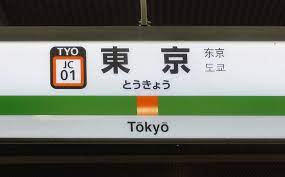
「とうきょう=TOKYO」is written in this way(When I was 8-9 years old,I learned <Tōkyō>in the school textbook. So I was really surprised at the writing <no macron> way after grown up.I got used to that now,thought)
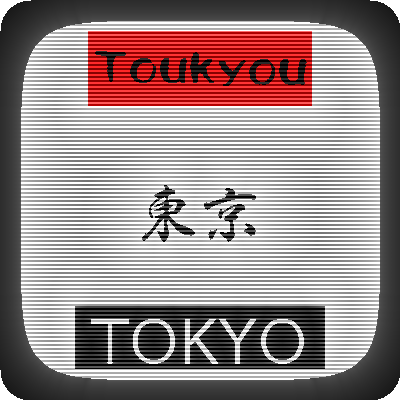
So we have many ways to write TOKYO.
(1)Tōkyō
(2)To-kyo-
(3)Tookyoo
(4)Toukyou
(5)Tohkyoh
(6)Tokyo
We write Tokyo in abbreviation way like (6).
I write TOKYO toOKYOO in this textbook
So if you have chance to read rooma-ji,they ALL have possibility contains abbreviation of long marker!
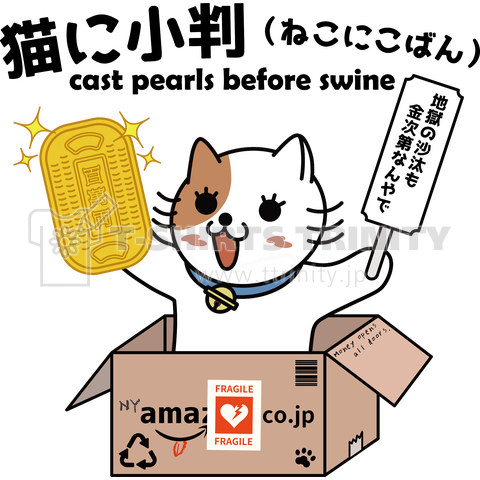
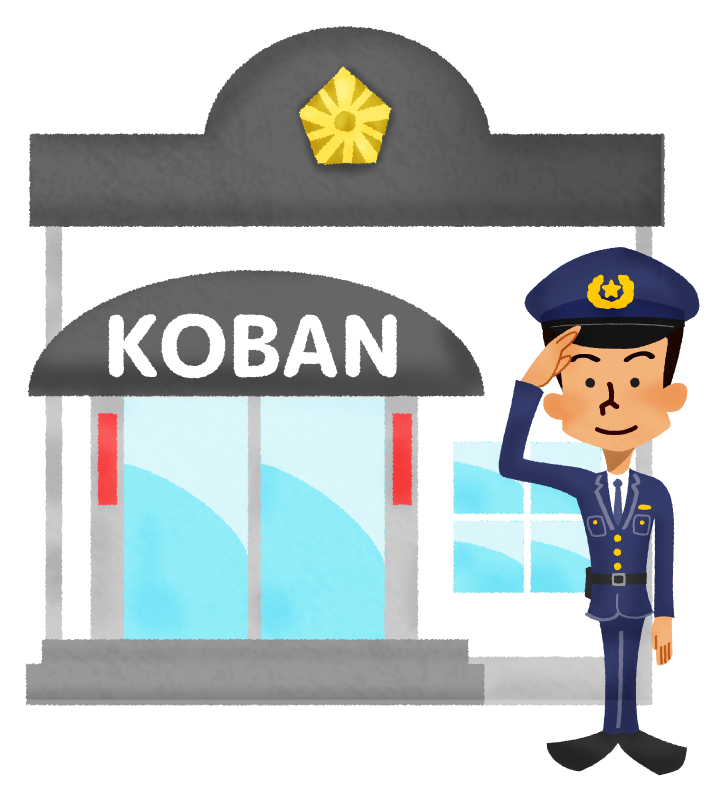
KOban is a former oval gold coin.
Police station’s correct pronunciation is koOBAN=こうばん。
(I don’t get used such one even now.)
We have some rare cases(hoNTO & hoNTOO) but basicly long vowel makes big difference.
ビル BIru beer
ビールBIiru building
スキ suKI to like(すき)
スキーsuKIi skiing
すきSuki is written in ひらがな normally but we can see often katakana way of writing in manga.I choose katakana way to compare with <ski>in this case.
ここ koKO here/Coco curry
こうこう koOKOO high school
はと HAto dove/pigeon
ハート haATO heart
かど KAdo corner
カード KAado card
サイコ SAiko psycho
さいこう saIKOO awesome
おじさん oJISAN uncle
おじいさんoJIisan grand father
まく maKU to roll(maKI・ZUSHI)
マーク MAaku mark
マック MAkku Mac

 ● lesson 1
 れっつごう
れっつごう